CEE does not need more political managers. It needs statebuilders Analysis November 3, 2026 Radu Magdin The CEE Leadership Upgrade: The Political Pillar. Central and Eastern Europe (CEE) has become very good at managing problems.
It is far less good at imagining its future. For thirty years we have learned to absorb shocks, negotiate in Brussels, reassure investors and spend European funds. Overall, we produced competent administrators and skilled survivors.
What we produced too few of are statebuilders. That gap matters more now than at any point since 1989. Europe faces a competitiveness crisis, a war on its eastern border and a technology race it is not winning.
In that world, managing the present is the minimum. Leaders also have to tell their societies where they are going, and then get them there. The Havel test I keep coming back to Václav Havel.
Not out of nostalgia, and not because the region needs another philosopher in a presidential palace. Havel mattered because he linked freedom to national purpose. He gave people a story they could believe in, and his authority came from that story as much as from his office.
Our post-communist story was simple and powerful: return to Europe. Join NATO, join the EU, catch up. It worked because it had a destination.
Most of us have now arrived. In too many capitals, the space where the story used to be has been filled with short-term promises, permanent electoral war, resentment and nostalgia. Plenty of politicians can explain what is wrong.
Far fewer can make a credible case for what could go right. Confidence is a policy I call this the politics of confidence. It is not spin, and it is not optimism on command.
It means telling citizens the truth about corruption, demography or the budget, and still convincing them that progress is possible. Confidence also has a price tag. Investors follow credible direction.
Founders need predictability. Young people need a reason to build at home, or to reconnect from abroad. A prime minister who only talks about deficits may be responsible, but he will not move a generation.
Any national narrative has to answer three questions. Where are we going? Why should we believe we can get there?
What is asked of each of us? A story without delivery is marketing. Delivery without a story is administration.
The region needs both. Resilience is not a strategy We are rightly proud of our resilience. We survived transition, financial crises, the pandemic, energy shocks and the return of war.
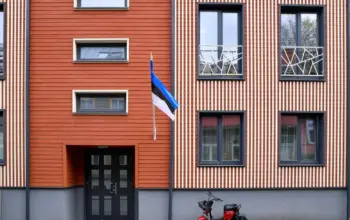
But a country cannot build its identity on having survived another hard year. The language of catching up has a hidden flaw: someone else always sets the finish line. Estonia refused that logic with digital government.
Poland used scale and investment to gain real weight in Europe. The Baltic states, small as they are, shaped the European security debate. None of them is perfect.
However, all of them show that size does not cap ambition. Romania, Czechia, Slovakia, Bulgaria and Croatia can each pick fields where they set the standard rather than follow it. Why stop at being a good manufacturing location?
Why accept being an exporter of talent instead of a global network of talent and capital? Why treat the EU mainly as a source of funds rather than a place to shape priorities? That is the move from survival to ambition.
And it has nothing to do with nationalism. Modern patriotism does not promise to shield a country from the world. It prepares that country to win in it.
From Europe’s periphery to Europe’s problem-solvers Since the Draghi report, nobody in Brussels disputes the diagnosis: too little scale, too little innovation, expensive energy, risky dependencies. CEE usually walks into these debates asking what a new rule will cost us or how much funding we will get. Fair questions, but small ones.
The bigger question is what we bring. On defence, the eastern flank can move from buying and hosting to producing and innovating, together with its European and transatlantic partners. On energy, few understand the cost of dependency better than we do.
On cybersecurity and software, we have real depth. On connectivity, a Baltic–Black Sea–Adriatic axis would strengthen the whole Union. And Ukraine’s reconstruction will run through our ports, roads and institutions.
This is not about lecturing Western Europe. It is about coming to the table with ideas, not just requests. Managers versus statebuilders A political manager asks how to stay in office.
A statebuilder asks what the country should become. Both have to win elections. Only one leaves institutions stronger than he found them.
The upgrade I have in mind rests on three things: confidence, ambition and delivery. Without confidence, ambition mobilises no one. Without ambition, delivery becomes a list of unrelated projects.
Without delivery, confidence collapses at the next election. And it has to stay democratic. Strong institutions are not institutions bent to strong personalities.
That, more than anything, is the Havel inheritance worth keeping. The region’s first transformation was driven by the promise of joining the West. The next one cannot be.
We are already inside, and cheap labour and geopolitical attention will not last forever. It has to be driven by purpose, and by leaders who think in twenty-year horizons rather than twenty-month ones. CEE does not need more political managers.
It needs statebuilders. Europe would be stronger for it. Photo: Dreamstime .
Absent friends
Topics: #cee #political #not